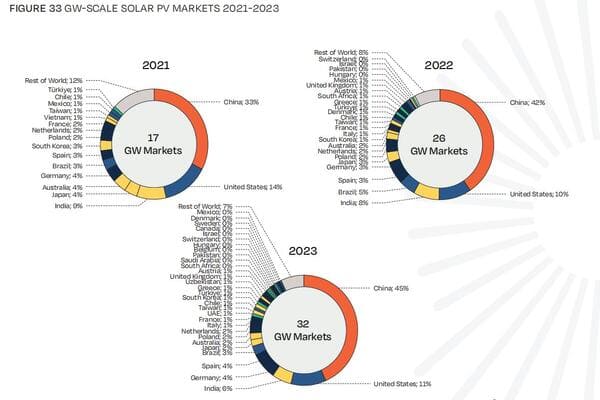
The demand in the global photovoltaic market continues remain strong in 2023. China is the largest application market for photovoltaics and the largest manufacturing base in the world. Globalization is also one of the main directions for the future development of Chinese photovoltaic enterprises. China's photovoltaic industry chain is complete, covering silicon materials-silicon wafers-cells-modules, and has the advantages of industrial linkage. At the same time, photovoltaic technology has a deep accumulation and a relatively solid industrial foundation. Some companies have invested and built factories overseas. In the context of global carbon neutrality, many countries and regions regard the development of renewable energy including photovoltaics as an important part of their carbon neutrality path. Driven by breakthroughs in renewable energy technology and policy tools, the global photovoltaic market has maintained a good momentum of development. The China Chamber of Commerce for Import and Export of Machinery and Electronic Products released the "White Paper on the External Development of China's Photovoltaic Industry" this year, pointing out that in the next 10 years, the global photovoltaic application market will still maintain a high demand. It is recommended that Chinese photovoltaic enterprises actively participate in the formulation of international standards for the photovoltaic industry; guide and encourage enterprises Increase investment in research and development, improve awareness of intellectual property rights strategy; establish a green and low-carbon certification standard system for photovoltaic products, and promote the docking of green and low-carbon trade rules and mechanisms at home and abroad. Fastensol- Your Solar Partner!
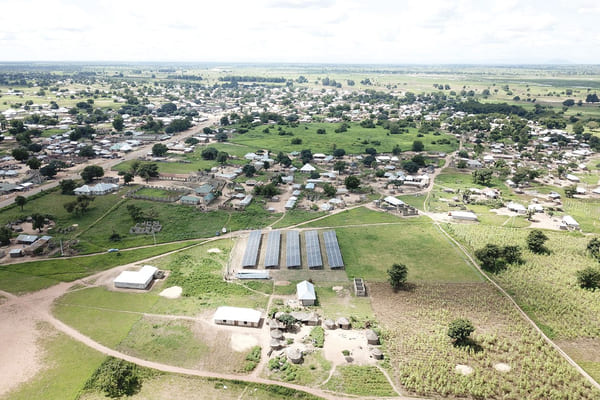
Nigeria mainly uses fossil fuels and hydro in its 4 GW power generation fleet. It has been estimated around 30 GW of capacity would be needed to fully cover its population of 200 million people. The International Renewable Energy Agency (IRENA) estimated Nigeria had 33 MW of grid-connected solar at the end of 2021. With solar irradiance ranging from 1.5 MWh/m² to 2.2 MWh/m², why does the country remain shackled by energy poverty? IRENA has estimated renewables could meet 60% of Nigeria’s energy demand by 2050. Thermal power stations generate around 70% of Nigeria’s electricity today, with hydro providing most of the remainder. Five main generation companies (GenCos) dominate and the Transmission Company of Nigeria is the sole transmission entity, responsible for the development, maintenance, and expansion of the transmission network. The distribution sector has been completely privatized. Power produced by the GenCos is sold to Nigerian Bulk Electricity Trading Company (NBET) which is the only bulk trader of electricity. It buys electricity from the GenCos through power purchase agreements (PPAs) and sells to private distributors through vesting contracts. This structure ensures that the generating companies get a guaranteed price irrespective of what happens on the distribution side. There are fundamental problems with the system which also affect the adoption of solar technology as a part of Nigeria’s energy mix. due to policy uncertainty and lack of grid infrastructure,the lack of lender trust in the Nigerian power market also stems from fundamental issues with the electricity grid, especially with regards to its reliability and flexibility. That is why most lenders and developers require guarantees to safeguard their investments. Much of Nigeria’s grid infrastructure is unreliable. Nigeria is a potentially big market for solar mini-grids as there are towns and communities without any connection to the grid. Mini grids are also an opportunity for developers and financiers to serve those without access to electricity, and for the development of captive solar power facilities for heavy energy consumers, such as mines, to ensure their own reliable and affordable power capacity. There is also opportunity for development of energy storage solutions to stabilize local grids. Tapping Nigeria’s PV potential will require a synchronous effort between the government, developers, lenders, and consumers. And time is of the essence now that many countries are in the race to net zero. Decarbonizing power infrastructure is key. Related Tages: Metal Roof Mounting, Pitched Roof Mounts, Solar Racking Solution Fastensol, Your Solar Partner!
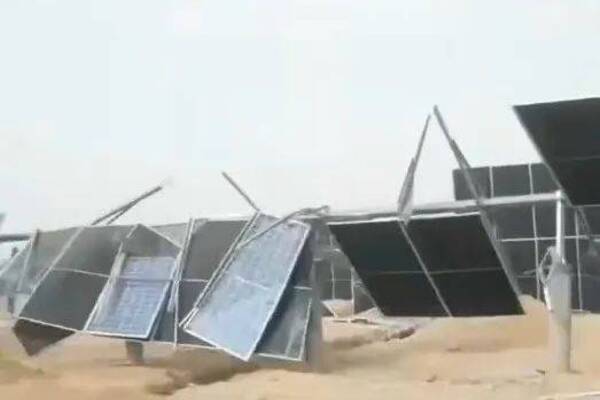
A photovoltaic hydrogen production project located in North-West of China was hit by a level 13 sandstorm. A large number of solar photovoltaic brackets collapsed, photovoltaic modules were damaged to varying degrees, and some modules were completely broken. Relevant personnel said that the serious damage to the project was the result of the joint action of various influencing factors. On the day of the accident, the gust intensity reached level 13 or above, and the windy weather lasted for nearly 12 hours. At the same time, the project uses super-large photovoltaic modules, and the design of the support strength does not fully consider the wind load. The reason for this accident is that the project developer did not purchase commercial insurance, and the manufacturer usually does not purchase additional commercial insurance for the manufactured products. lead to heavy losses. In order to prevent possible losses, during the project bidding stage, some owners will specifically propose that the general contractor (EPC) be responsible for purchasing "project all risks" and clearly write it into the contract. The various components used in this incident are not the first to come out, and it should be attributed to the lack of awareness of dealing with extreme weather and safety issues. For the construction of the project, it is not only about cost reduction, but also for safe and stable operation, it is necessary to thicken the component glass, strengthen the bracket material, deepen the piling, and take into account both cost and project safety.
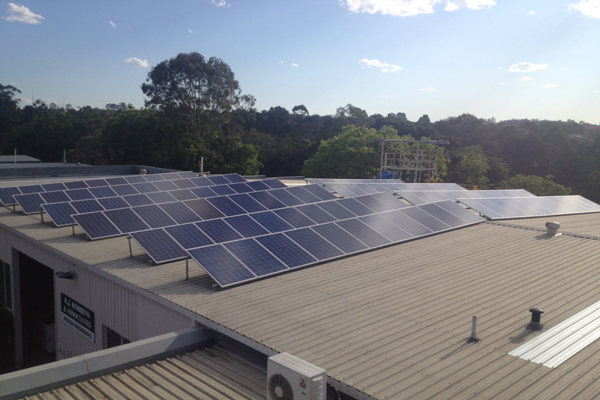
Data released by the Hellenic Association of Photovoltaic Companies, show that the Greek solar market installed three times more capacity in 2022 compared to 2021. Greece connected 1.36 GW of new PV capacity to the grid in 2022. Of this, 341.5 MW was connected to Greece’s transmission grid and about 1020MW was connected to Greece’s distribution grids. Given the fact that commercial net-metered system installations more than doubled that of residential systems, the Greek government wants to boost the residential segment by introducing a new generous rebate scheme aiming specifically at residential solar-plus-storage. The government said the new scheme will be published shortly, possibly before the end of March, 2023. And Greece aims to have 14.1 GW of installed PV capacity by 2030 and 34.5 GW by 2050. Fastensol- Your Solar Partner!

2022 has been a busy and unforgettable year for us, now it has come to an end. On behalf of Fastensol, we appreciate all of the strong support from our partners, friends, clients, fellows, connectors and every one we have met during the past time. A better and brighter year 2023 has come to us, along with challenges, we believe this would be an even fruitful year. Fastensol will have a short break from 17:00 pm 30th December, 2022 and get back on 3rd January 2023. We wish everybody happy new year! Best of luck in the year to come. Fastensol-Your Solar Partner!~
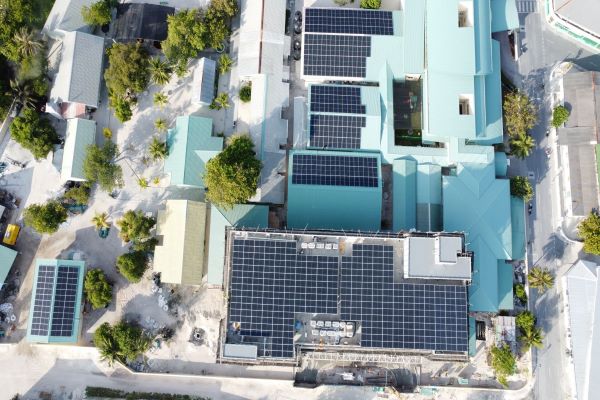
Economy Minister Robert Habeck, a leading member of the Greens party, noted that Germany needed to take a range of steps, including diversifying its sources of imports. "We need to admit that in the past we have been too reliant on Russian imports," Habeck told journalists ahead of a European Union meeting in Brussels. "In the medium and long term, we are going to significantly reduce the consumption of fossil fuels." Habeck's ministry plans to speed up the passage of the Renewable Energy Sources Act (EEG) through parliament so that it can come into force by July 1. The act would see Germany suspend cuts to subsidies for new solar panels on roofs this year and increase solar tenders to 20 gigawatts by 2028 from about five gigawatts now, keeping them at that level until 2035, the ministry said. Germany would also boost tender volumes for onshore wind energy to 10 gigawatts (GW) annually by 2027 from about two gigawatts now and keep them at that level through to 2035. These steps would help renewable sources account for 80% of Germany's electricity needs by 2030 and all of them by 2035, compared to a previous target to abandon fossil fuels "well before 2040", the ministry said. By 2035, Germany's onshore wind energy capacity should double to up to 110 GW, offshore wind energy should reach 30 GW and solar energy would more than triple to 200 GW. However, Habeck rejected calls for Germany to reconsider exiting coal and nuclear power in light of Russia's invasion. "Coal and nuclear are not alternatives for Germany," he said, noting that half of Germany's coal was also imported from Russia and adding that it would not be possible to keep nuclear plants online as they do not have approval to keep running. Fastensol is one of China's leading suppliers of solar mounting system. Fastensol- Your Solar Partner!

When full moon spread out the whole land, here comes the warm holiday: Mid-autumn Festival. People usually get reunion, eat moon cake and enjoy the full moon highly hanging in sky. As a part on Fasten solar, we would never miss any of the activities. Mooncake game, also known as BoBing in dialect of south Fujian Province, is traditional activity to celebrate by throwing out 6 dices in a bowl for any possibilities that will get rewarded. Some will get what they want while others will disappointed for “ bad luck”, the winner will get the largest parts. Our logistics department prepared lots of shopping cards as rewards and wish all good luck. As the mooncake game comes to an end, we are ready to evening party. We talked and discussed, drink and toast in a warm and pleasant atmosphere. In this day of harvest, happiness and reunion, let’s work together to make a further progress. Sincerely, kind greeting to all of you and your families, Fasten Solar wish you good health and happiness.
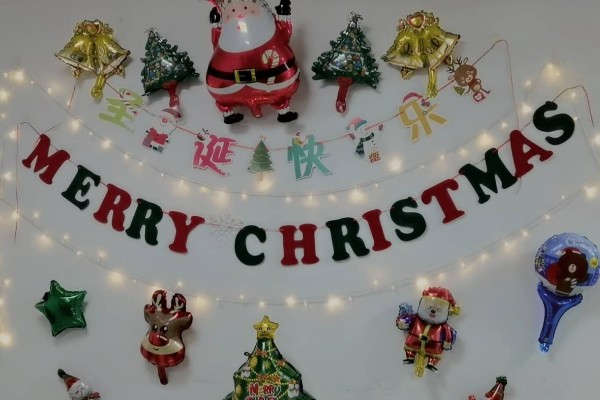
Jingle bell, jingle bell, The annual Christmas comes again! Because of the epidemic, The sales department of Fastensolar decide to give up visiting the dream world with ice and snow, but arrived at the artificial castle instead, and firmly promised we will be in the real ice and snow world next time. The four-day activity is made by varieties of tabletop games, a wonderful journey in the amusement park, casual talks in the hot spring, needless to say about delicacies. cold weather was melted by happiness, the pressure and anxiety of the whole year were melted at the same time. In the coming 2021, we will hope and effort to move on. Insist on Fasten solar's good service, profession, and high quality to bring more possibility to our dear partners and clients, to devote our love and sincerity into the clean energy. Fastensolar- Your Solar Partner!
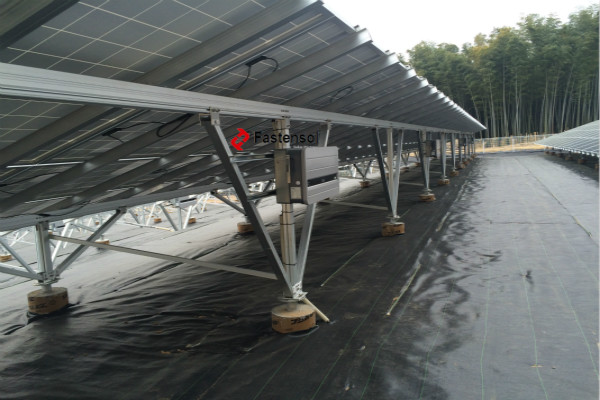
In the first half of 2020, affected by the COVID-19 epidemic, although global electricity demand fell by 3%, wind and solar power generation still increased by 14% year-on-year. Among the 48 countries and regions in the report, wind and solar power generation increased from 992 TWh in 2019 to 1,129 TWh in the first half of 2020. Compared with the first half of 2019, global coal power generation in the first half of 2020 fell by 8.3%. This is the biggest drop since 1990, following a 3% year-on-year decline in 2019. A major factor driving the decline in coal power generation is the decline in electricity demand caused by the global epidemic, but the increase in wind andsolar power generation and higher market shares are also the main reasons for the decline in coal power. Although the electricity demand caused by the COVID-19 epidemic has not yet affected wind and solar power generation. However, the global epidemic has affected the installation speed of new wind and solar power generation devices in 2020; the International Energy Agency (IEA) predicts that by 2020, the newly installed capacity of renewable energy power generation will drop by 13%, falling to the level since 2015 The lowest level. Dave Jones, senior power analyst at Ember, said: “Countries around the world are striving to build more wind spots and photovoltaic panels to replace coal power. If the global temperature rise is to be limited to 1.5 degrees Celsius, coal power generation will have to be generated every year for the next ten years. A reduction of 13%. However, despite the impact of the new crown epidemic that has curbed electricity demand as a whole, coal power generation only dropped by 8% in the first half of this year. This fact shows that we are still deviating from the energy transition track. We have a transition solution. The plan, it’s working, but it’s not progressing fast enough." Fastensol is one of China's leading suppliers of solar mounting systems has won the trust and good trade reputation of many foreign customers with its high-quality products, excellent R&D design capability, and high standard pre-sales and after-sales service.
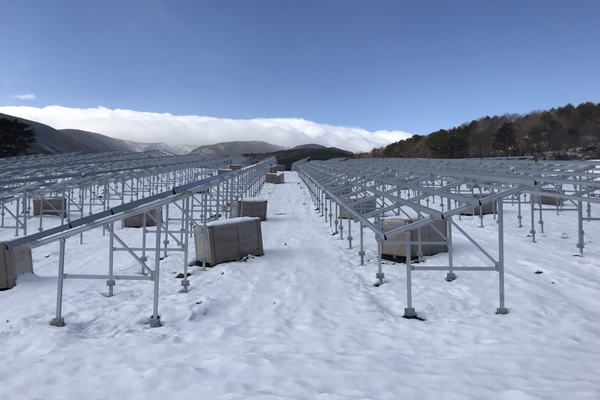
As the Covid-19 pandemic gradually eases, countries around the world have slowly begun to relax lockdown measures. Some countries have also launched varying types of economic stimulus to support the solar sector. In contrast to others, the Chinese market is stable, as the country has had some success in controlling the virus. With demand turning out better than anticipated in the second quarter and the spread of Covid-19 slowing in some overseas markets, PV InfoLink has raised its forecast for annual global module demand to 121.1 GW. Countries across the globe have launched solar stimulus packages in the wake of Covid-19, as part of wider moves to restart their economies. Shipments to the traditional leading European markets such as Spain and Germany have remained stable, sitting at 410 MW and 383 MW, respectively. Other marketplaces including the United States, the Middle East, and Australia, are also showing signs of recovery. They are likely to return to normality in the second half. The situation in Latin America is quite the opposite. The region’s politics and economy took a heavy blow amid virus outbreak and oil price crash. Demand weakened in April, with total module shipment volumes from China to Brazil, Mexico, and Chile having dropped nearly 75% compared to March. India’s further extension of lockdown has also hindered its demand recovery. Compared to March, China’s exports of modules to the country slumped by 65% in April. The situations in these marketplaces, however, did not change the fact that overall demand in Q2 fared better than initially expected. It is expected that markets will be totally reopened in July. As overseas markets start picking up during the second to early third quarter, demand will turn better at the end of September and reach the peak of the year in the final quarter. With the pandemic being gradually contained in many countries, global demand is likely to grow each quarter in the second half. However, as demand from quite a few projects have been deferred by the pandemic to the first half of 2021, the recovery will remain slow at the beginning of the third quarter and begin to climb, with demand reaching the highest level of the year in the fourth quarter of the year. The impacts of Covid-19 on the global solar sector may yet continue into 2021. Despite being hammered by the virus crisis, the world’s progress toward a low-carbon and sustainable future remains unchanged. Solar power, which has seen significant reductions in upfront cost and LCOE in recent years, will continue to lead the way in the long term. Fastensol is one of China's leading suppliers of solar mounting systems has won the trust and good trade reputation of many foreign customers with its high quality products, excellent R&D design capability and high standard pre-sales and after-sales service.
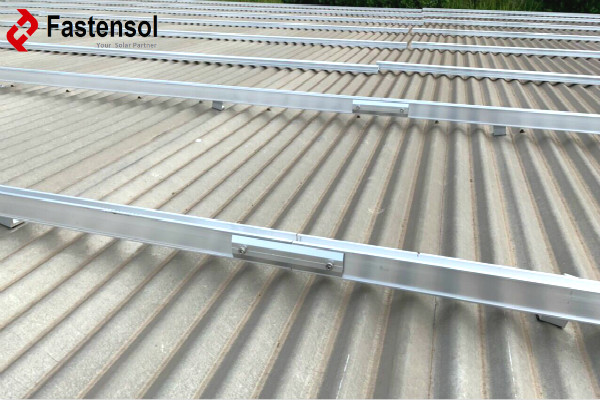
A few days ago, an industry research organization IHS Markit released a new survey study that shows that in the past 10 years, the number of renewable energy projects invested and constructed in the oil and gas industry has been increasing every year. In 2000, the oil and gas industry invested in less than 15 renewable energy projects throughout the year. This year, the number of renewable energy projects in the oil and gas industry is expected to exceed 45, an increase of 200%. IHS Markit believes that at this stage, under the background of increasing pressure on climate and environmental protection, global oil and gas companies are facing the test of transformation. “In order to reduce carbon emissions, oil and gas companies have begun to get involved in the renewable energy business. Among them, many companies choose to install photovoltaic power generation facilities on the roofs of their factories and use zero-carbon green electricity, thereby greatly reducing the carbon emissions generated by factory operations.” The survey shows that photovoltaic power generation, hydropower and wind power projects are the renewable energy projects with the largest number of investment and construction in the oil and gas industry. In 2018 and 2019 alone, the oil and gas industry invested in 13 and 15 renewable energy projects respectively. It is estimated that after these 28 projects are successfully completed and put into operation, they will contribute to the reduction of about 3 million tons of carbon dioxide emissions each year. In February of this year, the International Energy Agency (IEA) pointed out in its "Oil and Gas Industry in Energy Transition" report that although traditional energy businesses such as oil and gas can bring substantial returns to oil and gas companies in the short term, if the reduction is ignored Discharge may threaten the social acceptability and long-term profitability of these oil and gas giants. IEA believes that the participation of the oil and gas industry in investing in renewable energy projects is crucial. On the one hand, the oil and gas industry is still the cornerstone of today's energy system. In the next 20 years, oil and gas will remain one of the world's main energy sources, and this part of the demand needs to be guaranteed. On the other hand, the oil and gas industry emits relatively large amounts of greenhouse gases, and reducing their emissions is a key step to obtain environmental benefits. Therefore, in the face of emission reduction requirements, oil and gas companies should further "out of the comfort zone" and actively expand their renewable energy business. IEA predicts that in the future, the oil and gas industry will further expand its investment in the renewable energy market. So far, oil and gas companies have invested less than 1% of total capital expenditures outside of their core businesses. In order to promote continuous progress in the global response to climate change, investment in low-car...

Be one of the employees in Fastensol, we all finished the annual physical examination one by one throughout the whole July under the arrangement of logistic department. As we all know that,Fastensol not only cares for our working performance, but also our health, thus the routine physical examination always on the year schedule. The project includes some regular items and special items, like something related with cancer. Throughout the such activity, every one of us can well understand our health conditions so as to find out the potential illness. On the other hand, all of us will raise the awareness and keep healthy life habits.

 Unit 4B-8, No.16 Xiangxing 3rd Road, Free Trade Zone, Xiamen, 361006, China.
 +86-592-5660571
subscribe to receive inspiration,ideas and news in your inbox



Copyright © 2012-2026 Xiamen Fasten Solar Technology Co.,Ltd..All Rights Reserved.


 en
en ru
ru es
es pt
pt ar
ar ja
ja ko
ko 中文
中文


